Fixture finish is one of the last decisions people make and one of the first things anyone notices. The finishes differ in more than colour — how they wear, what they show, and whether they can be restored all vary.
Polished versus brushed, before colour
Before choosing a metal, choose a texture, because it affects daily life more than the colour does.
Polished finishes are mirror-like. They are bright and formal, and they show absolutely everything — fingerprints, water spots, toothpaste. In a hard water area a polished fixture needs wiping constantly to look as intended.
Brushed or satin finishes have a fine directional grain that scatters light. They disguise water spots and fingerprints substantially better, which is why they dominate in bathrooms and kitchens where fixtures are handled wet many times a day.
Matte finishes reflect almost nothing. Very contemporary, and depending on the specific product they can show water spotting more than expected — worth testing rather than assuming.
Chrome
The long-standing default. Hard, durable, available in virtually every style, and easy to match later because it is so common.
It is cool-toned and bright. Against warm materials — wood, brass hardware, warm-toned stone — it can read slightly clinical. Polished chrome shows water spots readily; brushed chrome much less so.
Brushed nickel
Warmer and softer than chrome, with a muted grey-beige cast. It hides spots and fingerprints well and sits comfortably in traditional and transitional rooms.
The caution is matching. "Brushed nickel" varies noticeably between manufacturers — some lean warm, some nearly grey. Mixing brands within one room can produce finishes that are visibly slightly different, which reads as a mistake rather than a choice. Samples matter here.
Brass and gold tones
The category that has come back strongest in recent years, and the one with the most variation hiding inside a single name.
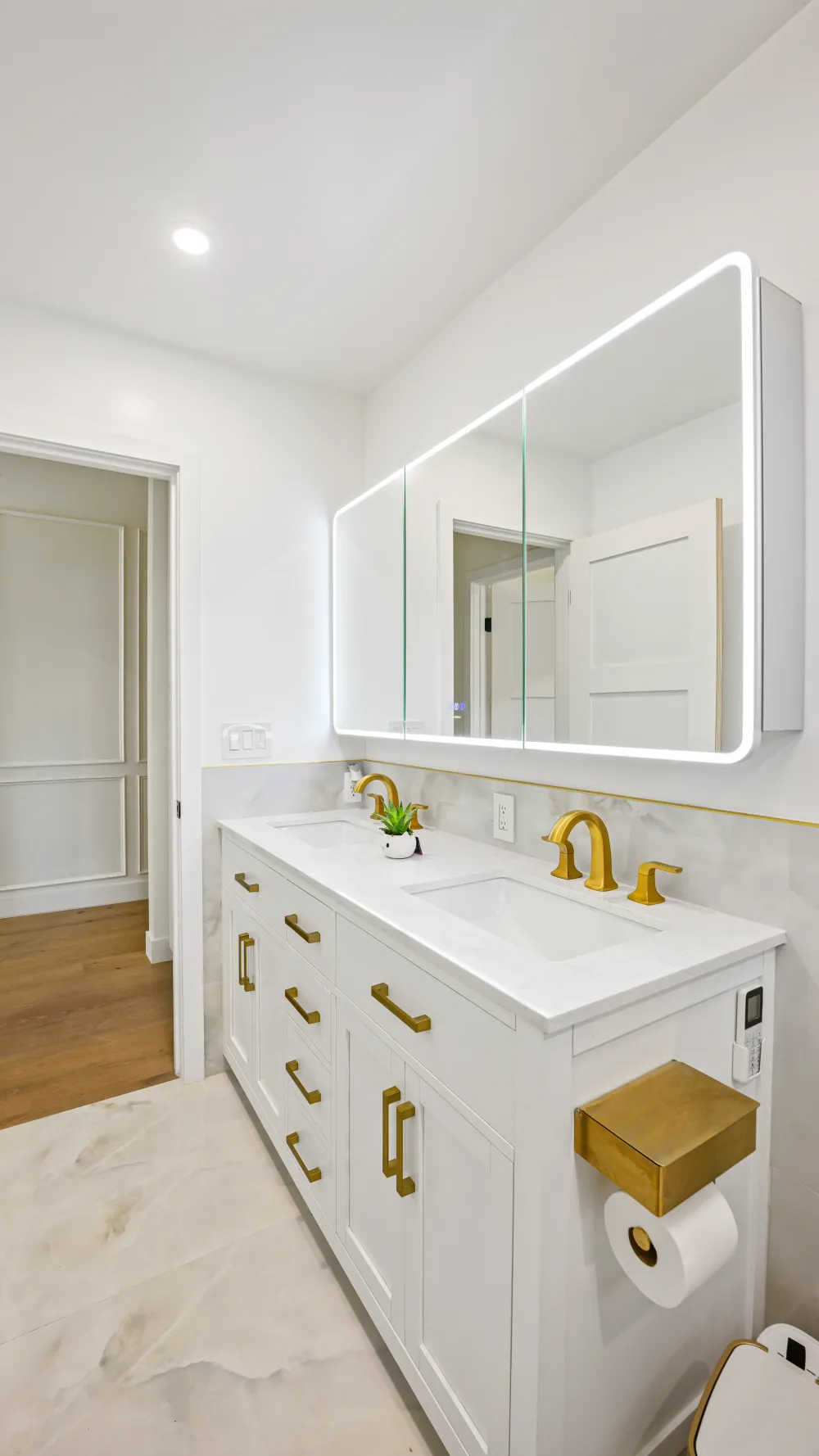
- Brushed or satin brass — warm, muted, forgiving of fingerprints. The most broadly usable of the warm finishes.
- Polished brass — bright and reflective, considerably bolder, and demanding about upkeep.
- Unlacquered or living brass — deliberately uncoated so it darkens and patinas with handling. Some people love the way it ages; others expect it to stay as installed and are unhappy when it does not. Know which you are buying.
- Champagne bronze and similar — warm neutrals that read gold without going bright.
Warm metals pair especially well with cool materials — charcoal or grey stone-look tile, cool marble, deep blues and greens. The contrast is what makes them land.
Matte black
Graphic and high-contrast, particularly against white or pale tile. It has become common enough to be a mainstream option rather than a bold one.
Two practical notes. Black shows hard-water mineral deposits clearly, since dried minerals are pale. And finish quality varies a great deal between manufacturers — the durability of the coating is what determines whether it still looks good after years of handling.
Oil-rubbed bronze
Dark brown-black with warm undertones, usually with intentional variation so highlights come through on the edges. Traditional in character.
Many oil-rubbed finishes are living finishes that continue to change with handling. As with unlacquered brass, that is a feature if you expected it and a complaint if you did not.
Mixing metals
Mixing is entirely acceptable and often better than rigid matching. What separates deliberate from accidental is structure:
- Let one metal lead. A dominant finish with a secondary accent reads intentionally. An even split reads indecisive.
- Keep plumbing consistent. Faucet, valve, handheld and tub spout in one room should generally match — these are seen together and in use at the same moment.
- Cabinet hardware is a fair place to diverge. It sits far enough from the plumbing to be its own decision.
- Repeat, do not isolate. Whatever the second metal is, use it more than once so it reads as a thread rather than an oddity.
- Mind warm against cool. Two warm metals or two cool metals coexist easily. One of each needs more deliberate handling.
Practical points
- Hard water is harsh on every finish. Brushed textures forgive it best.
- Abrasive cleaners damage coated finishes permanently — mild soap and a soft cloth is the safe default.
- Coated finishes cannot be restored once worn through, which is why coating quality matters more than the colour.
- Check availability across everything you need before committing. A finish available on the faucet but not the matching valve or accessories creates a problem late in the project.
Before deciding: get physical samples and look at them in the actual room, in daylight and under the lighting you will install. Metal finishes shift dramatically between showroom lighting and a real bathroom, and the difference between two similar warm finishes only becomes obvious side by side.