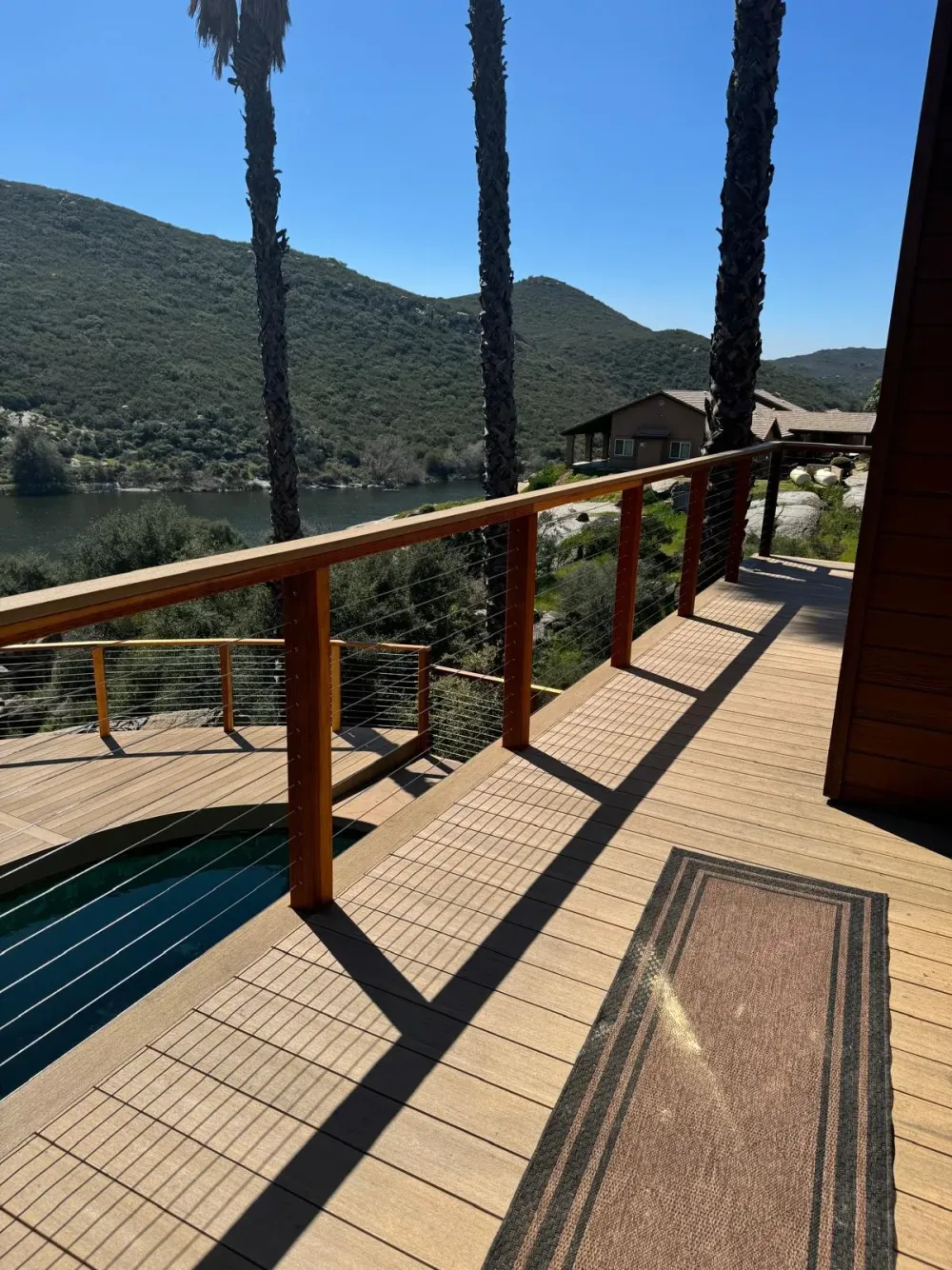
Outdoor structures near the coast face a specific combination of conditions: strong sun, salt in the air, and damp mornings that give way to dry afternoons.
What the climate actually does
Three things drive most wear on outdoor structures here.
Ultraviolet exposure breaks down finishes and fades color. South and west faces take the worst of it and will always weather ahead of the rest.
Salt air reaches well inland and accelerates corrosion on metal — fasteners, connectors and hardware in particular.
The daily moisture cycle of damp marine mornings and dry afternoons means materials are repeatedly wetted and dried. That cycle is harder on wood than steady conditions in either direction, because it drives the movement that opens joints over time.
Decking materials
Natural wood
Redwood and cedar are traditional here and are naturally more resistant to decay than untreated softwoods. They weather to a silver-grey if left alone, or hold their color with periodic refinishing. That refinishing is the ongoing commitment, and sun exposure determines how often.
Tropical hardwoods are dense and durable, heavier to work with, and need oiling to retain their original tone rather than greying.
Composite and PVC
Composite blends wood fiber with plastic; PVC omits the wood entirely. Neither needs refinishing, and both resist splintering, which matters where people are barefoot.
Two things worth knowing: darker boards absorb more heat and get hotter underfoot in direct sun, and quality varies considerably between products. Capped boards, with a protective shell over the core, generally hold color and resist staining better than uncapped.
The hardware matters more than people think
Near the coast, fasteners and connectors deserve real attention. Corrosion here is not cosmetic — hardware is what holds the structure together, and it is largely hidden from view once built.
Stainless and properly rated coated hardware exist specifically for these conditions. This is an area where the difference between adequate and appropriate is invisible on day one and very visible years later, and it is a reasonable thing to ask about.
Patio covers
The first question is how much light you want through.
- Solid roofs give full shade and rain protection, and make the space beneath usable year-round. They also darken adjacent rooms, so it is worth considering what is behind the covered area.
- Lattice and open structures filter light and cast a pattern that shifts across the day. They soften the sun without closing the sky off entirely.
- Adjustable louvered systems let you change the opening. More moving parts, more flexibility.
Orientation drives this more than anything. A west-facing patio takes hard low afternoon sun that an overhead structure alone will not block — that situation often calls for something vertical on the sun side.
Framing and finish
Wood framing is warm and takes stain or paint. Aluminum does not rot and stays dimensionally stable, and powder-coated finishes hold up well.
Whatever the structure, the connection points and the way water is shed off and away from the house are what determine longevity. Water that sits, or that runs back toward the structure, is what causes problems over the years.
Thinking about how it will be used
Before materials, consider the usage:
- Time of day the space gets used, which determines where shade needs to fall
- Whether it will carry a kitchen, heaters or a television, all of which need power or gas run out to it
- How it connects to the house — a step down, a flush transition, a door that needs clearance
- Lighting, which is far easier to run during construction than to retrofit afterward
- Privacy from neighbors, often better handled by the structure than by planting
Worth doing: spend time in the space at the hours you expect to use it, across a few different days. Sun angle and the marine layer change the experience considerably between morning and late afternoon.