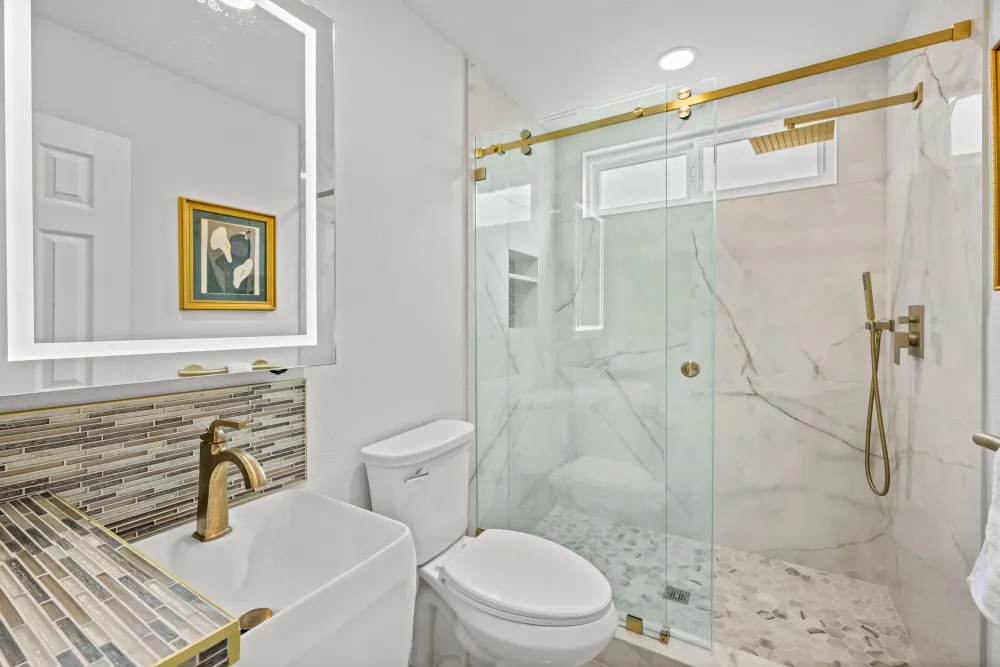
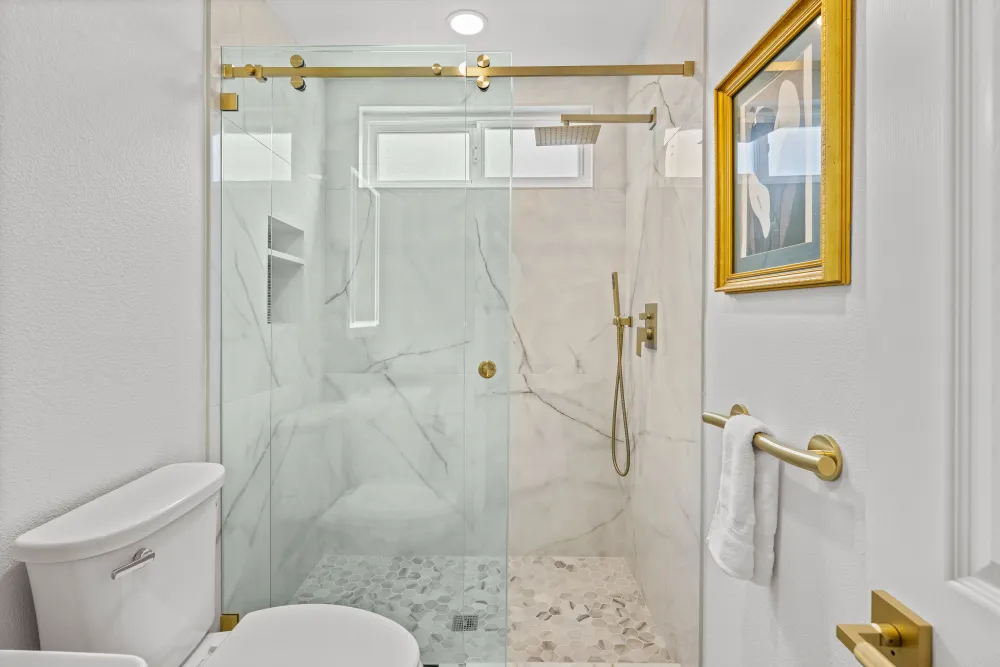
Two weeks to take out a tub and put in a shower — a short project, done properly.
Why two weeks is realistic and one is not
A tub-to-shower conversion has a floor in how fast it can go, and that floor is set by the drain and the waterproofing.
The drain has to be relocated, because a tub drains at one end and a shower drains from a point the floor slopes toward. That means opening the floor and reworking the waste line before anything can be built back.
Then the waterproofing has to go in and be given time. A pre-sloped pan, membrane carried up the walls, corners lapped, and the assembly left to cure before tile is set on it. That is not a stage that can be compressed by working later hours, and a contractor promising a finished shower in a few days is compressing exactly that stage.
Two weeks is what it takes to do the sequence in order. It is also short enough that a household with one other bathroom barely notices.
Tiled shower walls
New tile on the shower walls over new backer and new membrane. Everything behind the tile is new, which is the point of taking it back to the studs rather than tiling over what was there.
The lighted mirror
Lit from its own perimeter rather than from a fixture above. The electrical has to be located behind the mirror before the wall closes, so it is decided at the start of a two-week job rather than near the end of it.
The reason to bother is that light from above a mirror puts the underside of a face in shadow. Light from the mirror itself arrives from the front, which is what you want for shaving or applying anything.
New tile flooring
Replaced throughout, and run so the new shower sits on the same floor as the rest of the room rather than on a separate pad.
The result
A walk-in shower in place of a tub, with the room's finishes replaced around it, in two weeks.