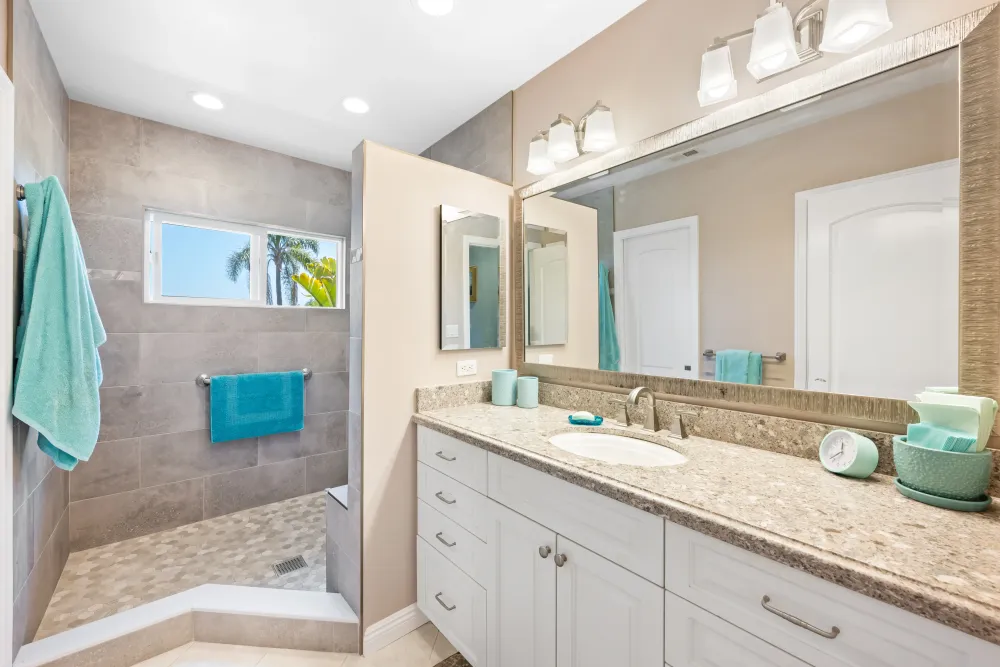
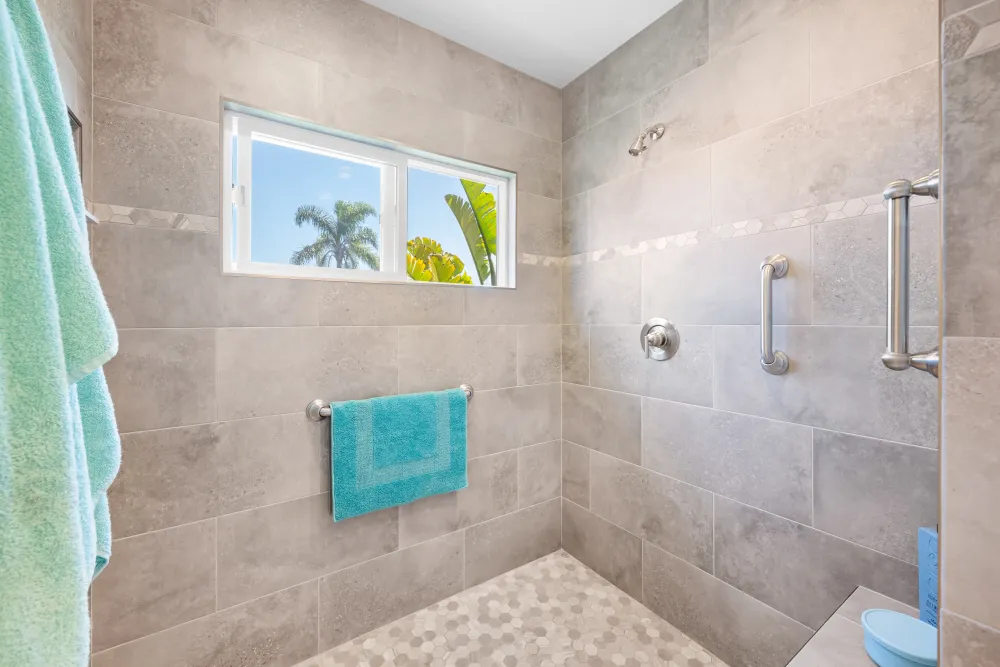
Three weeks, no fixtures moved, and every surface in the room replaced.
All tile, walls and floor
Tile on the walls and tile on the floor, so there is no painted surface in the room to maintain.
In a smaller bathroom this is the decision that does the most work. Paint near a shower is the finish that shows age first, and the wall it sits on is the one most likely to have taken moisture over the years. Replacing it with tile removes both the maintenance and the question of what is behind it.
Running tile across walls and floor also lets the room read as one volume rather than as a floor, a dado and a painted top half. Fewer material changes in a small room make it feel larger, not busier.
Rebuilding the shower in place
Nothing moved, which is what held this to three weeks. That does not mean the shower was refreshed — it came out to the studs.
The waterproofing assembly is the whole reason to do it that way. Retiling over an existing pan and existing backer board is faster and it is how a shower ends up failing quietly behind a wall that looks new. If the tile is coming off, the membrane behind it is coming off too.
Custom vanity
Built for the room. In a bathroom this size the vanity is a large share of the visible surface that is not tile, and a stock unit that misses the wall length by an inch or two is visible from the doorway for the life of the room.
Building it also means the storage is arranged around where the plumbing actually comes through the wall, rather than around where a manufacturer assumed it would.
The result
A compact San Diego bathroom rebuilt surface by surface without moving a single fixture, in three weeks.